

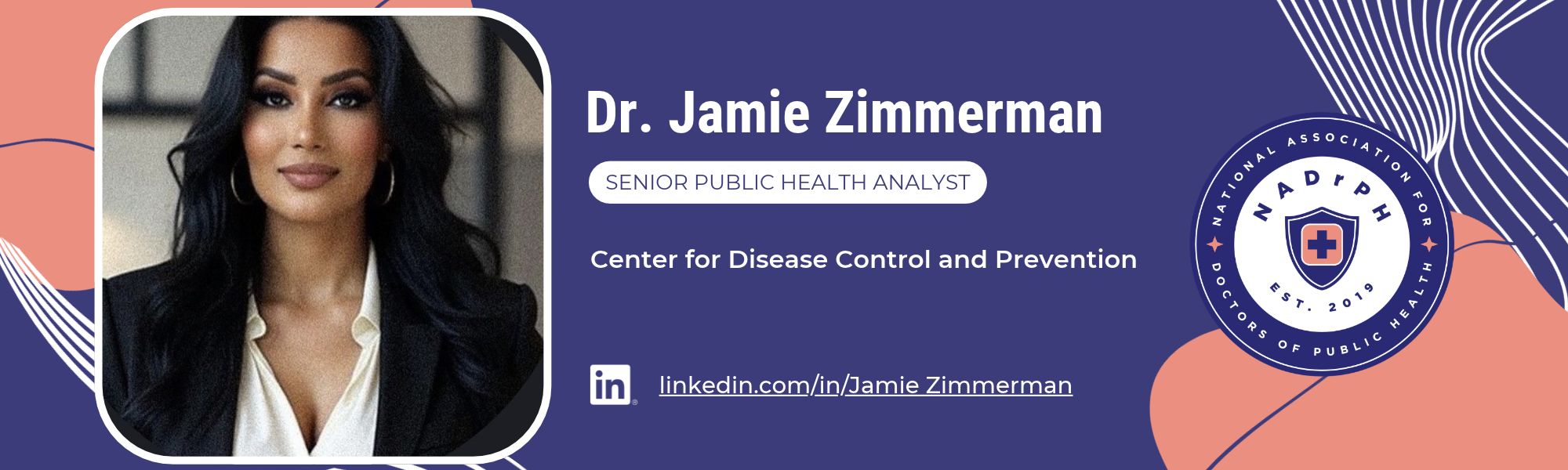
Tell us about yourself.
I am a public health strategist, researcher, and consultant who is passionate about health equity, mental wellness, community voice, and systems change. I recently completed my DrPH in Diverse Populations and Health Equity, where my dissertation research explored medical language brokering among adult children of immigrants and the long-term mental health impact of carrying adult responsibilities at a young age. That work deeply shaped how I understand resilience, identity, family responsibility, and the need for more culturally responsive systems.
Professionally, I support public health agencies, nonprofits, and community-based organizations through strategic planning, evaluation, facilitation, training, and program design. I enjoy helping organizations move from big ideas to practical, people-centered action. At the heart of my work is a commitment to translating research and lived experience into strategies that improve the conditions in which people live, learn, work, heal, and thrive. Outside of my professional roles, I am someone who values faith, purpose, reflection, and growth. I believe public health is not only about data and systems, but also about people’s stories, dignity, and ability to imagine something better.
Why did you pursue a DrPH?
I pursued a DrPH because I wanted to move beyond studying public health problems and become better equipped to lead practical, equity-centered solutions. My work has always been rooted in the belief that communities closest to the problem should also be closest to the strategy, decision-making, and systems change. The DrPH gave me the space to strengthen my leadership, research, evaluation, and policy skills while staying grounded in applied public health practice. I was especially drawn to a DrPH because of its focus on translating evidence into action. My interests in health equity, diverse populations, mental wellness, and community-centered public health required training that was both rigorous and real-world. Pursuing the DrPH helped me deepen my voice as a scholar-practitioner and affirmed my commitment to building healthier, more responsive systems for communities that have too often been overlooked.
What are you currently excited about in your job?
I am currently most excited about using public health as a bridge between lived experience, community voice, and systems change. In my work, I get to support organizations with strategy, evaluation, facilitation, training, and health equity initiatives that move ideas from vision to implementation. I enjoy helping teams make sense of complex challenges, center the people most impacted, and turn community knowledge into practical plans, programs, and measures of progress. I am also excited about the opportunity to keep growing as a scholar-practitioner. My recent dissertation research explored medical language brokering among adult children of immigrants and its long-term mental health impact, and that work continues to shape how I think about mental wellness, family responsibility, cultural identity, and institutional support. Right now, I feel energized by work that allows me to combine research, storytelling, strategy, and action in ways that help communities not just survive, but thrive.
If you could write a book about your life, what would the title be and why?
Title: Becoming: The Long Road Back to Myself If I could write a book about my life, the title would be Becoming: The Long Road Back to Myself. So much of my journey has been about growth, healing, identity, purpose, and learning how to turn difficult experiences into wisdom and service. I have had seasons where I was surviving, seasons where I was striving, and seasons where I was slowly becoming the person I was called to be. The title reflects the idea that becoming is not a single moment; it is a lifelong process of learning, unlearning, rebuilding, and choosing purpose even when the path is unclear. My DrPH journey, my work in public health, and my personal experiences have all taught me that our stories can become tools for connection, advocacy, and transformation.
What is something interesting about you that we should know?
Something interesting about me is that I see public health as both a science and a calling. My dissertation research focused on medical language brokering among adult children of immigrants, which allowed me to explore how family responsibility, culture, language, and mental health intersect in powerful ways. That work was deeply personal and professionally meaningful because it reflected experiences that are often invisible in health systems. I also recently turned my dissertation research into a peer-reviewed publication, which was a full-circle moment for me. It reminded me that the stories we carry can become scholarship, strategy, advocacy, and healing when they are given the right language and platform.
